
Lesson Introduction
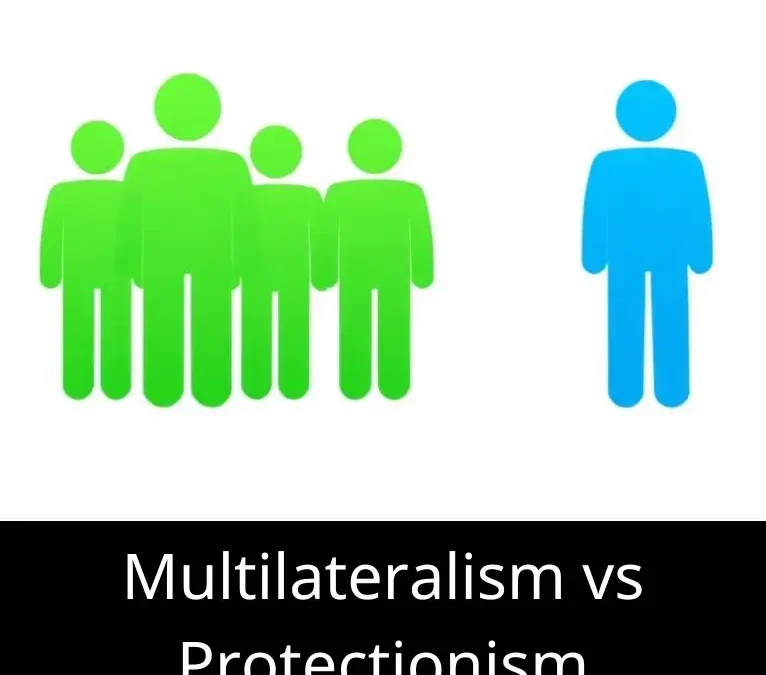
Multilateralism and protectionism shape how countries trade, compete, and respond to global pressures. While they are often framed as opposites, they are better understood as two strategic approaches governments use to manage risk, secure advantage, and navigate an increasingly interconnected world.
Multilateralism emphasises cooperation, shared rules, and predictable systems. It lowers barriers, stabilises expectations, and enables countries to solve problems that are too large to tackle alone. Protectionism, by contrast, prioritises domestic security and control. It uses tariffs, quotas, subsidies, and regulatory barriers to shield local industries from external shocks and foreign competition. Each approach carries benefits and costs, and each creates ripple effects across consumers, businesses, supply chains, and geopolitical relationships.
In this module, we examine the long running tension between multilateralism and protectionism. We explore the logic behind cooperative systems, the political appeal of defensive measures, and the economic trade offs that sit beneath both. Using global and South African examples, we show how countries blend openness and protection in practice, and why modern trade policy is increasingly hybrid rather than ideological.
This module is designed for professionals who need a practical understanding of how trade strategies work, why governments shift between cooperation and control, and how these choices influence markets, industries, and long term economic outcomes.
Learning Outcomes
By the end of this module, you will be able to:
- Define multilateralism and protectionism Understand the core principles behind cooperative trade systems and defensive trade measures.
- Explain why countries choose each approach Identify the political, economic, and strategic motivations that drive openness or protection.
- Describe key multilateral mechanisms Recognise how treaties, institutions, and shared rules shape global trade and reduce uncertainty.
- Identify common protectionist tools Understand tariffs, quotas, subsidies, bans, and localisation requirements and how they affect markets.
- Analyse the trade offs between efficiency and resilience Evaluate how openness lowers costs while protection strengthens buffers against shocks.
- Assess hybrid trade strategies Understand how major economies blend cooperation and defence, and why pure models rarely exist.
- Apply concepts to real world cases Examine how South Africa and global economies navigate supply chain risks, industrial policy, and geopolitical pressures.