Whistleblowing in South Africa: how to speak up and stay safe.

Whistleblowing in South Africa: how to speak up and stay safe.

In South Africa, blowing the whistle can sometimes cost people their lives. But it can also change the country. Here’s what it achieves — and how to do it safely.

Watch the Easy Institute whistleblowing trailer
Understand what whistleblower protection really means, what happens when organisations get it catastrophically wrong, and how you can keep yourself safe.

A man of courage

Mpho Mafole had been in his new job for three months. He joined the City of Ekurhuleni in April 2025 as group divisional head for corporate and forensic audits, bringing with him 14 years of experience at the office of the Auditor-General of South Africa. He was 47. He had two teenage children. His mother was in a wheelchair. His father had just retired after 41 years of teaching at the same school.

On 27 June 2025, Mafole published an audit report detailing irregularities in the awarding of a R1.8 billion chemical toilets tender. Three days later, on 30 June, he was driving home along the R23 in Kempton Park from a meeting in Alberton. Gunmen pulled alongside his vehicle and opened fire. Police found him in a pool of blood at 5:55pm. He was dead at the scene.

But whistleblowing also brought down a president

Mafole’s story is not the only story. And it’s important that it isn’t.

In 2017, two anonymous whistleblowers — known only as “Stan” and “John” — handed a human rights lawyer named Brian Currin a set of hard drives. Those drives contained 300,000 emails detailing what the Zondo Commission would later describe as the corrupt relationship between the Gupta family, the Zuma family, cabinet ministers, and the CEOs of state-owned enterprises. The full architecture of State Capture. Documented. Deliverable.

Stan and John knew the risks. Corruption had penetrated law enforcement deeply enough that they didn’t trust official channels. They went to the media instead — Daily Maverick and amaBhungane — who spent months analysing the emails before publishing. The whistleblowers were relocated before the story broke. They got out safely.

What followed was the most significant accountability moment in post-apartheid South Africa. The Zondo Commission. The fall of Jacob Zuma. Billions in irregular expenditure exposed. Prosecutions ongoing.

Two people. Two hard drives. Three hundred thousand emails. And the courage to hand them over knowing what it might cost.

What whistleblowing actually achieves

The personal cost of whistleblowing is real and well documented. But so is the benefit — to individuals, to organisations, and to the country.

For individuals: Whistleblowers who come forward through protected channels gain legal protection against dismissal and occupational detriment under the Protected Disclosures Act. They also gain something harder to quantify — the ability to sleep at night knowing they did the right thing. Cynthia Stimpel, the SAA Group Treasurer who flagged a R256 million irregular contract in 2016, paid a significant personal price. She was suspended, then left. But the contract didn’t go through. And she has since become one of South Africa’s most respected voices for accountability and governance reform.

For organisations: Internal whistleblowing is one of the most effective early warning systems available. The Association of Certified Fraud Examiners consistently finds that tips — most of them from employees — are the number one method for detecting fraud, ahead of internal audits, management review, and external audit combined. Organisations with functioning, trusted reporting channels lose significantly less to fraud than those without. A whistleblowing culture isn’t a reputational risk. It’s a financial control.

For SOEs and government: The Zondo Commission estimated that State Capture cost South Africa between R500 billion and R1 trillion. Eskom alone lost hundreds of billions to corrupt procurement. PRASA. SAA. Transnet. The damage was compounded by a culture of silence — one where people knew, but felt either too afraid or too powerless to speak. Every rand of that damage is an argument for building better whistleblower systems now.

“Tips are the number one method for detecting fraud — ahead of internal audits, management review, and external audit combined.” — Association of Certified Fraud Examiners

How to blow the whistle safely in South Africa

This is the section that matters most. Because courage without a plan is just exposure. Here’s how to do it properly.

Step 1: Document everything before you say a word. Gather evidence — emails, documents, financial records, dates, names, amounts. Be specific. Vague allegations are easily dismissed and leave you exposed without the protection of a verifiable disclosure. The more detail you have before you speak, the stronger your legal standing.

Step 2: Know your legal protection. The Protected Disclosures Act of 2000 protects employees who make disclosures in good faith about criminal conduct, failure to comply with legal obligations, miscarriage of justice, or danger to health and safety. The Companies Act extends protection to directors, auditors, and company secretaries. The Labour Relations Act protects against unfair dismissal as a result of a protected disclosure. Know which law covers you before you act.

Step 3: Choose your channel carefully. This is the most critical decision. Internal reporting — to a line manager or ethics hotline — is appropriate when you trust that your employer will act on the information and that the wrongdoing doesn’t implicate senior leadership. When it does implicate leadership, or when you have reason to believe internal channels are compromised, go external immediately.

Step 4: Use independent anonymous channels. South Africa has several:

Safe reporting channels in South Africa

Corruption Watch — independent nonprofit, accepts anonymous tip-offs, specifically focused on corruption in schools, hospitals, government, and private sector. www.corruptionwatch.org.za

Public Service Corruption Hotline — government hotline for public sector corruption. 0800 701 701. Anonymous, 24 hours.

Whistle Blowers (Pty) Ltd — independent ethics hotline provider operating across public and private sectors. Multi-channel, all official South African languages. www.whistleblowing.co.za

PPLAAF — Platform to Protect Whistleblowers in Africa. For high-risk disclosures, provides legal support, security advice, and if necessary, relocation assistance. www.pplaaf.org

amaBhungane and Daily Maverick — investigative media. For large-scale public interest corruption, going to trusted investigative journalists — as Stan and John did — is a legitimate and protected disclosure route under the PDA.

The FSCA — for financial sector misconduct specifically, the FSCA has a dedicated whistleblowing mechanism for reporting contraventions of financial sector laws.

Step 5: Protect your digital trail. If you are reporting sensitive information, use a secure, non-work device. Don’t use your work email, work phone, or work computer to research whistleblowing channels or draft reports. Use a personal device on a personal network. Consider a VPN. If the disclosure is high-risk, PPLAAF offers specific digital security guidance.

Step 6: Get legal advice before you act. The South African Human Rights Commission and several public interest law firms offer guidance to whistleblowers. Knowing your rights before you speak significantly reduces your exposure. The proposed Whistleblower Protection Amendment Bill, currently working through the legislative process, would establish a fund to assist whistleblowers with legal costs — but until it passes, budget for this yourself if you can.

The framework is imperfect. Use it anyway.

South Africa’s current whistleblower protection regime has real gaps. The Protected Disclosures Act leaves whistleblowers vulnerable to intimidation, job insecurity, and threats to their physical safety. It doesn’t mandate confidentiality of identity. It doesn’t cover volunteers or independent contractors. Reform is coming — but it isn’t here yet.

That’s the honest picture. And it doesn’t change the fundamental truth: the alternative to imperfect protection is silence. And silence, as Mpho Mafole’s story and the State Capture decade both prove, is always more expensive than speaking.

Mafole had a mandate. He had a policy. He had 14 years of experience and the full authority of his role. He published his findings through the proper channels on a Thursday. He was gone by Monday evening.

Stan and John had nothing but courage and a good lawyer. They changed the country.

The difference between those two outcomes wasn’t luck. It was the channel they chose, the anonymity they maintained, and the support structure they used. That’s what this article is for. And it’s what the Easy Institute whistleblowing module unpacks in full.


There are plenty more modules where this came from.

Sign up or sign in to explore the full Easy Institute CPD catalogue — every subject your compliance requires, none of the boredom.
 

Iran’s 2026 Shadow Fleet: Keeping the Oil Moving

Iran’s 2026 Shadow Fleet: Keeping the Oil Moving

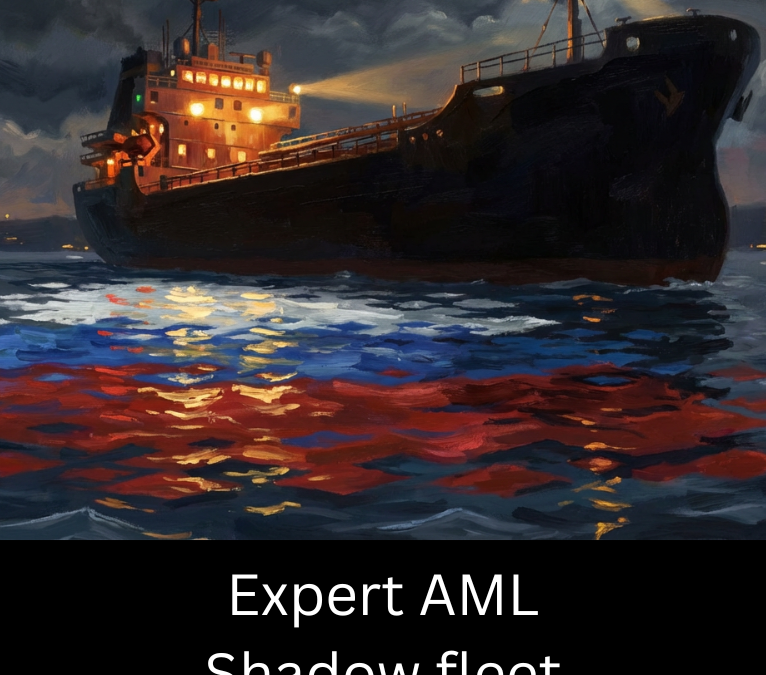
In 2026, the waters around Iran are under the heaviest scrutiny in years. Naval pressure has intensified, inspections have surged, and AIS (the global maritime tracking system) is watching every tanker that so much as flickers on its screen. On paper, this should have been the moment the “shadow fleet” finally stalled—the moment the world’s most persistent sanctions-evasion network ran out of room to manoeuvre. But that hasn’t happened.

Watch our Shadow Fleet trailer to understand how the fleet operates and how it continues to defy the world’s most powerful navies.

The blockade that didn’t hold

Multiple open‑source maritime‑tracking reports now indicate that, to date, at least 26 to more than 30 Iranian‑linked tankers successfully navigated in or out of the Gulf despite the blockade pressure. Analysts from Lloyd’s List and IntelliNews describe a pattern of operational failures, with vessels slipping through using the same tactics that have defined the shadow fleet for more than a decade: AIS spoofing, false flags, dark activity, and smaller feeder ships used to bypass scrutiny. Enforcement gaps, fragmented jurisdiction, and the sheer geographic scale of the Gulf have created openings that even coordinated naval patrols struggle to close.

Some reports highlight specific examples. An Al Jazeera investigation noted a vessel identified as “13448” breaking through the blockade, while other tankers — including the Roshak — were observed exiting the Gulf during periods of heightened enforcement. IntelliNews estimated that the continued movement of sanctioned cargo generated hundreds of millions of dollars in revenue, despite the pressure. At the same time, U.S. officials reported intercepting dozens of vessels and disputed the scale of Iranian success, creating a landscape of conflicting claims — but one consistent pattern: the flow never stopped.

How the shadow fleet was built

To understand why, you have to go back to where this system began.

Iran didn’t build the shadow fleet in response to 2026. It built it more than a decade ago.

When sanctions tightened in the early 2010s, Iran faced a structural crisis: how do you sell oil when the global financial system is designed to prevent it? The answer wasn’t a loophole. It was an entirely new logistics architecture — a parallel maritime economy built on opacity, misdirection, and the ability to move crude without relying on the regulated world.

The mechanics of invisibility

Ageing tankers were bought for scrap value and repurposed. Ownership was buried inside single‑ship shells. AIS manipulation became a strategic tool rather than a technical anomaly. Ship‑to‑ship transfers were choreographed in blind zones — often off Fujairah, in the Gulf of Oman, or in the South China Sea, far from the enforcement footprint. Documents were rewritten mid‑voyage. Cargoes changed identity before they ever reached a buyer.

By the time the world started paying attention, the system was already mature — and it had already been copied. Russia’s post‑2022 sanctions network adopted many of the same techniques, proving that Iran’s model had become the global blueprint for sanctions‑resilient logistics.

Built to absorb pressure

And when pressure intensified again in 2026, the fleet didn’t collapse — it simply shifted. Loadings moved further offshore. STS transfers multiplied. Routing patterns changed. The same architecture that allowed Iran to survive earlier sanctions cycles allowed it to absorb the latest wave of enforcement.

Why this is an AML problem, not a maritime one

This is why the shadow fleet matters for AML. It isn’t a maritime story. It’s a financial‑crime ecosystem.

For South African AML and compliance professionals, the lesson is clear: the vessels may be thousands of miles away, but the illicit money and the risk associated with it are right here in our ledgers. Payments, insurance chains, trade finance flows, and fuel imports all intersect with markets where sanctioned oil is blended, rebranded, and quietly pushed into global supply. Blending hubs in Fujairah, Malaysia, and Singapore routinely absorb shadow‑fleet cargoes before they enter legitimate trade finance channels — including letters of credit, marine insurance, and commodity‑linked payments that pass through South African institutions. South Africa doesn’t operate a shadow fleet — but our financial system touches it every day.


There are plenty more modules where this came from. Sign up or sign in to explore the full Easy Institute CPD catalogue — every subject your compliance requires, none of the boredom.

Leadership styles: What Trump gets right, what he gets dangerously wrong

Leadership styles: What Trump gets right, what he gets dangerously wrong

Donald Trump’s leadership style is all about him. And that’s both his greatest strength and his most dangerous flaw. In January 2025, he walked back into the White House. He’d been impeached twice, indicted four times, convicted in a criminal trial, survived an assassination attempt, and constantly mired in scandal. By any conventional measure of political durability, he should have been finished years ago. He wasn’t. He won by a bigger margin than his first election.

Watch our leadership trailer. Understand why the most powerful thing a leader can do is lead exactly as they are — and why that choice always carries consequences.

The man who made himself the message

Whatever you think of Trump — and people think very different things — his trajectory is worth examining. Not politically. Professionally. Because what Trump demonstrates, at an almost clinical level, is how a specific kind of leadership style, the leader is the brand, can generate extraordinary momentum, fierce loyalty, and remarkable resilience. And how, in the wrong hands, that same style can hollow out the institutions around it.

Trump didn’t develop his leadership style in politics. He developed it in the 1980s, in New York real estate and tabloid culture, where visibility was currency and boldness was survival. Buildings and businesses carried his name. Books carried his voice. Television turned him into a character the public recognised instantly.

By the time he entered politics, the model was fully formed. The leader wasn’t just running an organisation — the leader was the organisation. His name, his narrative, his persona. Identity as strategy.

When advisers urged him to soften his messaging during the 2016 campaign, he intensified it instead — more rallies, more direct communication, more conflict. He won. That’s not luck. That’s a leader who understood his own style and trusted it completely.

Now. About the name thing.

This takes “The leader is the brand” to almost absurd levels. Within weeks of his second inauguration, Trump renamed the Kennedy Center — one of America’s most beloved cultural landmarks, named for an assassinated president — the Trump Kennedy Center. He put his face on postage stamps, commemorative coins, and government buildings. He’s adding his signature to dollar bills. And the list goes on: Trump’s name is now on airports, battleships, and even national park passes,

We’ll let you sit with that one for a second.

None of these actions tanked his support. Some of them strengthened it. And that’s the fascinating, maddening, genuinely instructive thing about this leadership model: behaviours that would end most careers don’t just survive here — they become the point. The brand is the message. The audacity is the credential.

Every single one of those moves has one thing in common. They’re not about the institution. They’re not about the mission. They’re not about the people being served. They’re about the man. Always the man.

And that pattern — invisible at first, then impossible to ignore — is where every leader needs to do a quiet bit of self-reflection.

Loyalty is powerful. Until it isn’t.

Rex Tillerson was the former CEO of ExxonMobil. One of the most experienced executives on earth. Trump appointed him Secretary of State, then publicly called him “dumb as a rock” after he resigned. James Mattis — a four-star general, widely regarded as one of America’s finest military minds — resigned and wrote that Trump lacked the character to lead. John Kelly, his own Chief of Staff, later said Trump was “the most flawed person” he’d ever met.

These weren’t political opponents. These were his own people.

What replaced them wasn’t better judgment. It was agreement. Quieter voices. People who’d learned that challenge was expensive and compliance was safe. And when the people closest to a leader stop telling the truth, the leader stops making good decisions. Not because they’re stupid. Because they’re operating on bad information.

It’s the oldest leadership failure in the book. And it doesn’t only happen in the White House. It happens in boardrooms, in financial institutions, in small businesses with charismatic founders who’ve stopped being questioned.

So the lesson isn’t “Don’t be confident.” Confidence is a gift in a leader. And it isn’t “Don’t build a strong personal brand.” Identity-driven leadership creates real loyalty and real momentum — Trump proved that beyond any doubt.

The lesson is simpler and harder than that.

Ask yourself honestly: could your organisation survive without you? Not just function — thrive? Because a leader who makes themselves irreplaceable hasn’t built a legacy. They’ve built a dependency. And dependencies, however powerful they look from the outside, are one bad day away from collapse.

After all, one of Trump’s closest allies, influential Republican Senator Lindsey Graham, had this to say about him in an HBO interview in 2021: “President Trump could make the Republican Party something that nobody else I know can make it. He can make it bigger. He can make it stronger. He can make it more diverse,” Graham said. Then the senator added, “And he also could destroy it.”


There are plenty more modules where this came from. Sign up or sign in to explore the full Easy Institute CPD catalogue — every subject your compliance requires, none of the boredom.