
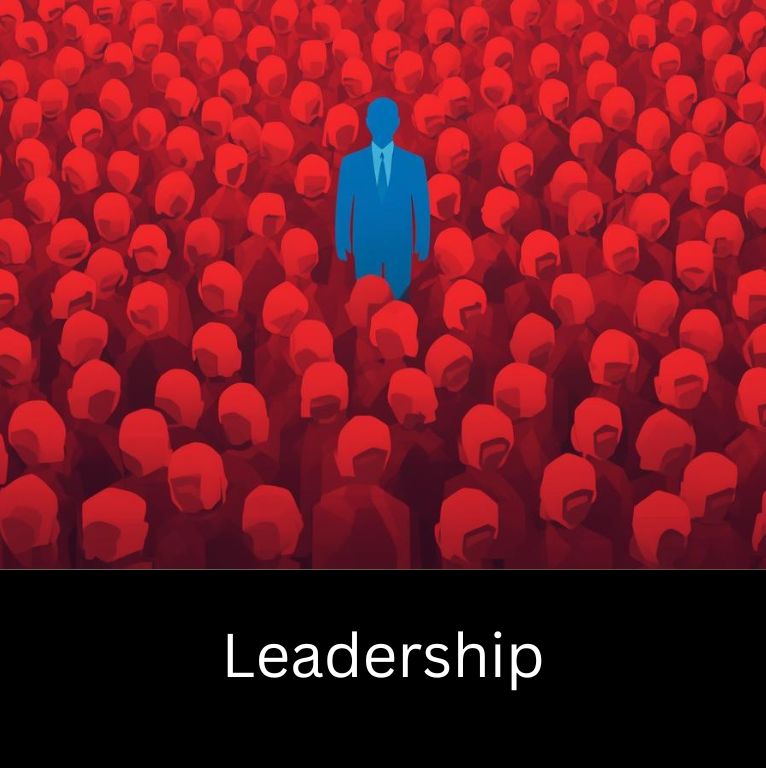
Donald Trump’s leadership style is all about him. And that’s both his greatest strength and his most dangerous flaw. In January 2025, he walked back into the White House. He’d been impeached twice, indicted four times, convicted in a criminal trial, survived an assassination attempt, and constantly mired in scandal. By any conventional measure of political durability, he should have been finished years ago. He wasn’t. He won by a bigger margin than his first election.
Watch our leadership trailer. Understand why the most powerful thing a leader can do is lead exactly as they are — and why that choice always carries consequences.
The man who made himself the message
Whatever you think of Trump — and people think very different things — his trajectory is worth examining. Not politically. Professionally. Because what Trump demonstrates, at an almost clinical level, is how a specific kind of leadership style, the leader is the brand, can generate extraordinary momentum, fierce loyalty, and remarkable resilience. And how, in the wrong hands, that same style can hollow out the institutions around it.
Trump didn’t develop his leadership style in politics. He developed it in the 1980s, in New York real estate and tabloid culture, where visibility was currency and boldness was survival. Buildings and businesses carried his name. Books carried his voice. Television turned him into a character the public recognised instantly.
By the time he entered politics, the model was fully formed. The leader wasn’t just running an organisation — the leader was the organisation. His name, his narrative, his persona. Identity as strategy.
When advisers urged him to soften his messaging during the 2016 campaign, he intensified it instead — more rallies, more direct communication, more conflict. He won. That’s not luck. That’s a leader who understood his own style and trusted it completely.
Now. About the name thing.
This takes “The leader is the brand” to almost absurd levels. Within weeks of his second inauguration, Trump renamed the Kennedy Center — one of America’s most beloved cultural landmarks, named for an assassinated president — the Trump Kennedy Center. He put his face on postage stamps, commemorative coins, and government buildings. He’s adding his signature to dollar bills. And the list goes on: Trump’s name is now on airports, battleships, and even national park passes,
We’ll let you sit with that one for a second.
None of these actions tanked his support. Some of them strengthened it. And that’s the fascinating, maddening, genuinely instructive thing about this leadership model: behaviours that would end most careers don’t just survive here — they become the point. The brand is the message. The audacity is the credential.
Every single one of those moves has one thing in common. They’re not about the institution. They’re not about the mission. They’re not about the people being served. They’re about the man. Always the man.
And that pattern — invisible at first, then impossible to ignore — is where every leader needs to do a quiet bit of self-reflection.
Loyalty is powerful. Until it isn’t.
Rex Tillerson was the former CEO of ExxonMobil. One of the most experienced executives on earth. Trump appointed him Secretary of State, then publicly called him “dumb as a rock” after he resigned. James Mattis — a four-star general, widely regarded as one of America’s finest military minds — resigned and wrote that Trump lacked the character to lead. John Kelly, his own Chief of Staff, later said Trump was “the most flawed person” he’d ever met.
These weren’t political opponents. These were his own people.
What replaced them wasn’t better judgment. It was agreement. Quieter voices. People who’d learned that challenge was expensive and compliance was safe. And when the people closest to a leader stop telling the truth, the leader stops making good decisions. Not because they’re stupid. Because they’re operating on bad information.
It’s the oldest leadership failure in the book. And it doesn’t only happen in the White House. It happens in boardrooms, in financial institutions, in small businesses with charismatic founders who’ve stopped being questioned.
So the lesson isn’t “Don’t be confident.” Confidence is a gift in a leader. And it isn’t “Don’t build a strong personal brand.” Identity-driven leadership creates real loyalty and real momentum — Trump proved that beyond any doubt.
The lesson is simpler and harder than that.
Ask yourself honestly: could your organisation survive without you? Not just function — thrive? Because a leader who makes themselves irreplaceable hasn’t built a legacy. They’ve built a dependency. And dependencies, however powerful they look from the outside, are one bad day away from collapse.
After all, one of Trump’s closest allies, influential Republican Senator Lindsey Graham, had this to say about him in an HBO interview in 2021: “President Trump could make the Republican Party something that nobody else I know can make it. He can make it bigger. He can make it stronger. He can make it more diverse,” Graham said. Then the senator added, “And he also could destroy it.”
There are plenty more modules where this came from. Sign up or sign in to explore the full Easy Institute CPD catalogue — every subject your compliance requires, none of the boredom.